The short verdict on Klaviyo vs Mailchimp: if you run an online store, choose Klaviyo — it was built to turn customer data into revenue, and it shows in every flow and report. If you are a service business, creator, or nonprofit sending newsletters and campaigns, Mailchimp’s simplicity and gentler pricing win. Most of the confusion online comes from comparing them as equals when they are really specialists in different jobs.
We build and manage both platforms for clients, so the breakdown below is the one we actually use in discovery calls — including the pricing cliff nobody mentions until the invoice arrives.
| Factor | Klaviyo | Mailchimp |
|---|---|---|
| Built for | E-commerce revenue | General business marketing |
| Free tier | Up to ~250 contacts | Up to ~500 contacts |
| Paid plans from | ~$20/month | ~$13/month |
| Store integrations | Deepest in the industry (Shopify, Woo) | Good, less granular data |
| Automation flows | Advanced, behaviour- and purchase-driven | Solid for standard journeys |
| Revenue attribution | Native — every email shows its dollars | Basic reporting |
| Learning curve | Steeper, data-heavy | Friendliest in the category |
Where Klaviyo wins: stores that live on data
Klaviyo’s entire design assumes you sell products online. It syncs every order, browse, and cart event from Shopify or WooCommerce, then lets you build automations on that behaviour: abandoned-cart sequences that reference the exact product, win-back flows triggered by purchase gaps, VIP segments built on real spend.
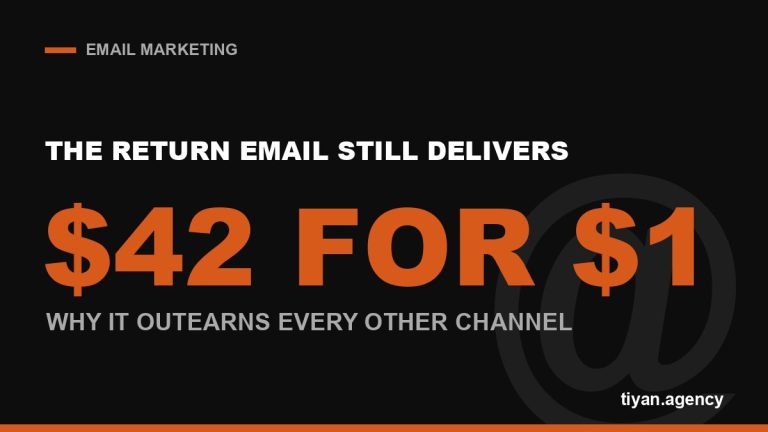
Its killer feature is revenue attribution — every campaign and flow reports the actual dollars it generated, not just opens and clicks. When email is supposed to pay for itself (and it should — the channel famously returns around $42 for every $1 spent), seeing revenue per email changes how you run the program.
Where Mailchimp wins: everyone who isn’t a store
Mailchimp remains the friendliest serious email platform: clean templates, an editor anyone on the team can use, and enough automation for welcome series, newsletters, and event promotion. For consultancies, restaurants, nonprofits, and local services — businesses whose email goal is staying remembered rather than tracking cart values — Klaviyo’s data machinery is weight you would carry without using.
It is also simply cheaper at small scale, with a larger free tier and lower entry plans. If your list is a few hundred subscribers and your emails are monthly updates, Mailchimp does the job with the least friction.
The pricing reality: both get expensive, differently
Both platforms price by contact count, and both climb faster than people expect. Klaviyo’s curve is steeper — serious e-commerce lists reach hundreds of dollars a month — but stores usually earn it back visibly, because the attribution shows exactly what the platform returns. Mailchimp stays cheaper longer, but watch two traps: contacts are counted across audiences (including unsubscribed, on some plans), and features you assumed were included appear on higher tiers.
The honest rule: price the platform against your list in twelve months, not your list today — and clean your contacts quarterly, because on both platforms you are paying rent on every address.
- ✓ Shopify or WooCommerce store → Klaviyo
- ✓ Service business, creator, or nonprofit → Mailchimp
- ✓ Need revenue-per-email reporting → Klaviyo
- ✓ Small list, simple newsletters, tight budget → Mailchimp
- ✓ Complex behaviour-driven automations → Klaviyo
- ✓ Non-technical team runs the emails → Mailchimp
Switching later is fine — just not free
Plenty of businesses start on Mailchimp and graduate to Klaviyo when the store grows; contacts and templates migrate, automations get rebuilt. It is a weekend of work for a professional, not a crisis. So do not agonise: pick the platform that fits the next twelve months, and treat a future migration as a good problem — it means the list grew.
If you would rather skip the agonising entirely, our email marketing team sets up and manages both platforms daily. Send over your list size and store setup via the enquiry form and a recommendation will land in your inbox within a business day — flows, pricing tier, and migration plan included.
Klaviyo vs Mailchimp FAQs
Is Klaviyo better than Mailchimp?
+
Is Klaviyo or Mailchimp cheaper?
+
Which is better for Shopify — Klaviyo or Mailchimp?
+
Can I switch from Mailchimp to Klaviyo?
+
Is Klaviyo worth it for a small business?
+
Do Klaviyo and Mailchimp have free plans?
+
What should a non-ecommerce business use for email marketing?
+