Email automation flows are the closest thing marketing has to compound interest: you build the sequence once, and it works every night after — welcoming subscribers, recovering abandoned carts, and reviving lapsed customers with zero ongoing hours once live. Campaigns are what you send; flows are what you own. These are the seven that pay for themselves fastest, in the order we build them for clients.
| Flow | Trigger | Who needs it |
|---|---|---|
| 1 · Welcome series | New subscriber joins | Everyone |
| 2 · Abandoned cart | Cart created, no checkout | Stores |
| 3 · Browse abandonment | Product viewed, no cart | Stores |
| 4 · Post-purchase | Order completed | Everyone selling anything |
| 5 · Review request | Delivery + a few days | Everyone |
| 6 · Win-back | No purchase in X days | Everyone with repeat business |
| 7 · Sunset | Long-term non-openers | Everyone (deliverability) |
01The welcome series: your best open rates, ever
Trigger: someone joins your list. Sequence: 3–4 emails over a week — deliver the promised incentive, tell the story that makes you different, show your best product or content, make one clear offer.
Welcome emails routinely see open rates three to four times higher than regular campaigns — the subscriber literally just asked to hear from you. Wasting that moment on a lone “thanks for subscribing” is the most common money-leak in small-business email.
02Abandoned cart: the highest-ROI emails in existence
Trigger: items in cart, checkout never finished. Sequence: a reminder within a few hours, a nudge with social proof at ~24 hours, a final urgency or incentive email at ~48–72 hours.
Industry research consistently puts cart abandonment around 70% — most of your almost-customers walk. A three-email recovery flow wins back a meaningful slice of them and, for most stores, out-earns every campaign you’ll send this year.
03Browse abandonment: the gentle version
Trigger: a known subscriber views a product but never carts it. Sequence: one or two soft emails — “still thinking about this?” plus alternatives.
Lighter intent than a cart, so keep it helpful rather than pushy, and cap the frequency. Done right it feels like a good shop assistant’s follow-up; done wrong it feels like being followed. One well-timed email beats three desperate ones.
04Post-purchase: where repeat customers are made
Trigger: an order or a signed contract. Sequence: confirmation with genuine warmth, how-to-get-the-most-from-it guidance, then a well-timed cross-sell or replenishment reminder.
The cheapest customer to win is the one you already won. This flow turns a transaction into a relationship — and for service businesses, it’s where onboarding lives: what happens next, who to contact, what to prepare. Buyer’s-remorse silence kills more repeat business than price ever does.
05Review request: your marketing team of strangers
Trigger: a few days after delivery or project completion. Sequence: one honest ask, one polite reminder. Link straight to the review platform that matters most — Google for local businesses, product pages for stores.
Reviews compound like content does: they improve local rankings, conversion rates, and ad performance simultaneously. Asking automatically — while the experience is fresh — is the entire trick; businesses that “ask when we remember” collect a tenth of what this flow does.
06Win-back: cheaper than any acquisition channel
Trigger: no purchase or engagement for a set window — 60–90 days for most stores, longer for services. Sequence: “we miss you” with your strongest proof, then an incentive, then an honest last call.
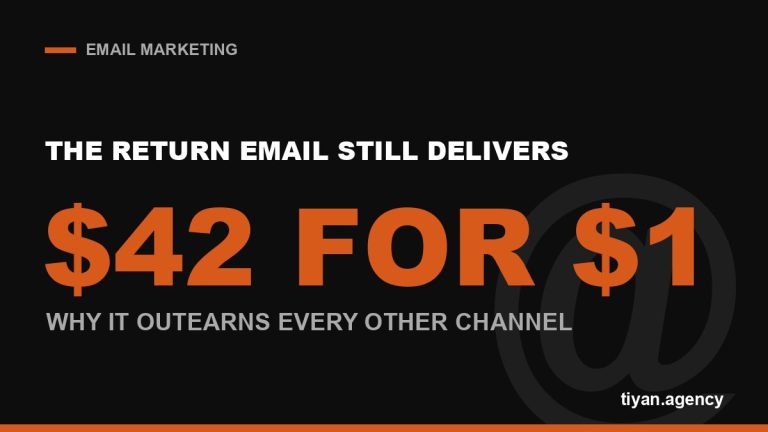
A lapsed customer already trusted you once; reviving them costs a fraction of finding a stranger. Even a small recovery rate here typically beats the same spend on new-customer ads — which is exactly the arithmetic we walk through in why email returns $42 per $1.
07Sunset: the flow that protects all the others
Trigger: months of zero opens or clicks. Sequence: one “should we stop emailing you?” message, then automatic removal of non-responders.
Counterintuitive but critical: deleting dead subscribers improves results. Mailbox providers judge you by engagement rates, so a bloated list of ghosts drags every other flow into the promotions tab — and on both major platforms you pay rent per contact. Pruning is a profit decision twice over.
Don’t build all seven at once. Stores: cart → welcome → post-purchase, then the rest. Service businesses: welcome → post-purchase/onboarding → review request. Each flow should be live and tested before the next one starts — three working flows beat seven half-built ones.
Every flow above runs on Klaviyo or Mailchimp — which one fits you is its own question. If you’d rather have the whole system built, tested, and writing itself, that’s precisely what our email marketing team does on both platforms. Sketch your business and list size in the enquiry form and you’ll get a recommended flow map and price back within a working day.
Email automation FAQs
What is an email automation flow?
+
Which email automation should I set up first?
+
How many emails should a welcome series have?
+
Do abandoned cart emails actually work?
+
Do automation flows work for service businesses?
+
Why should I delete subscribers who don’t open emails?
+
How much does email automation cost to set up?
+